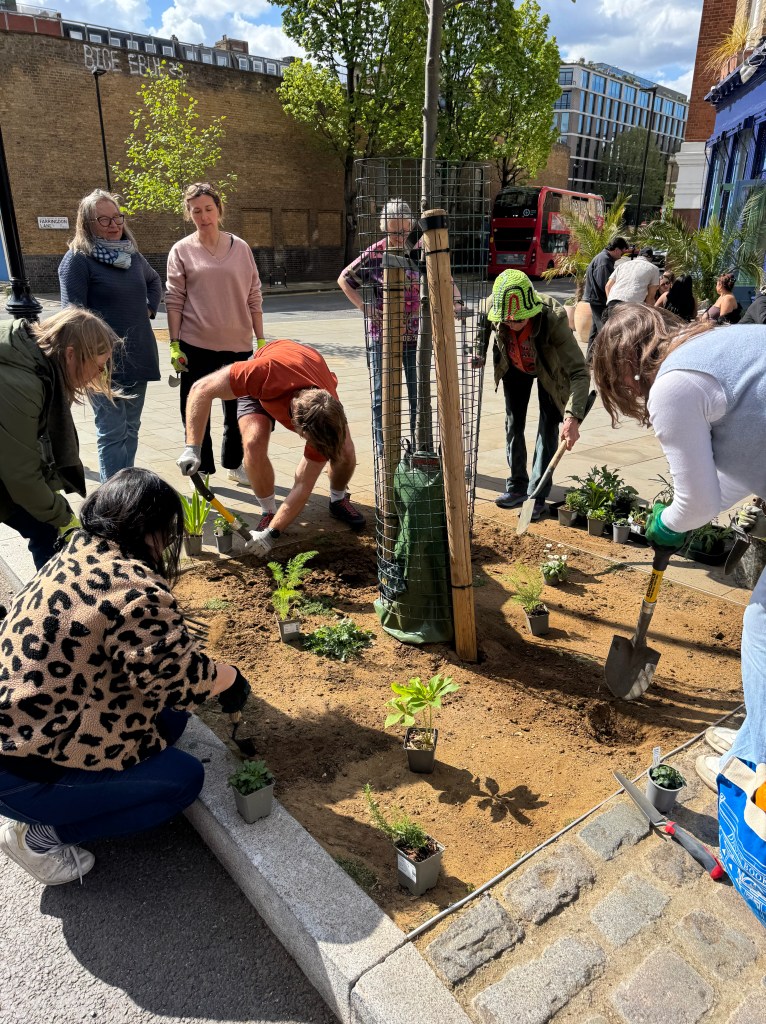
A successful tree pit balances the needs of pollinators with enough of a cared-for garden look to reduce trampling or littering.
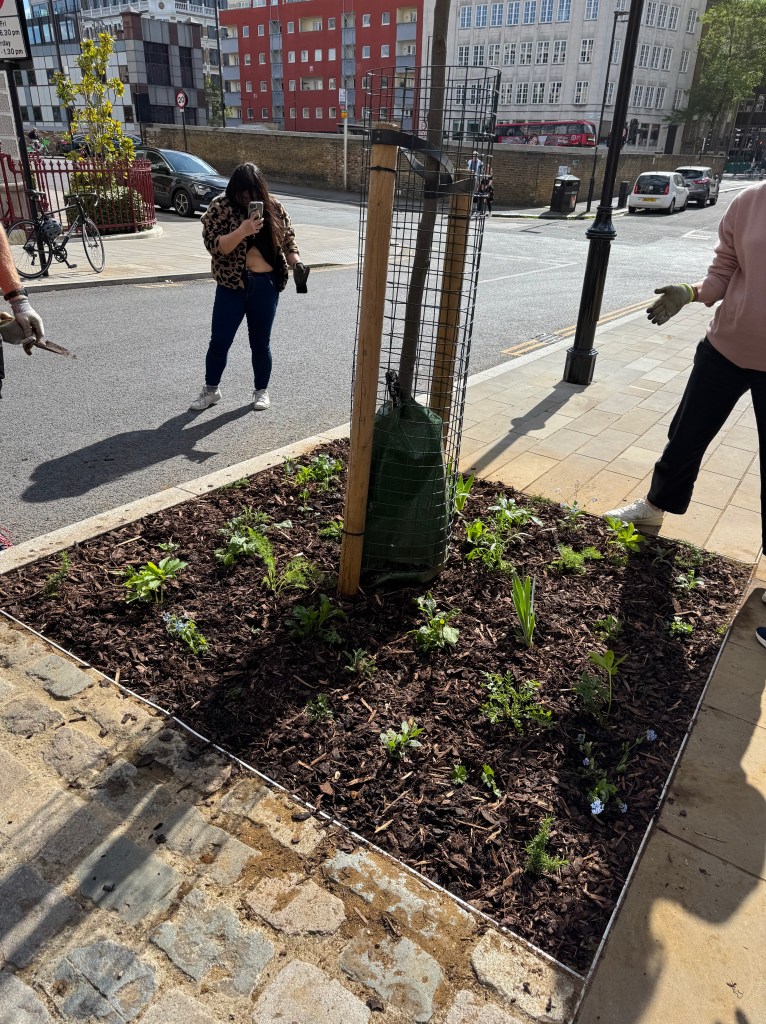
The pit is in Clerkenwell Green, London, part of the emerging Clerkenwell Pollinator Pathway, the workshop put on by Islington in Bloom and took place in the Museum of St John.
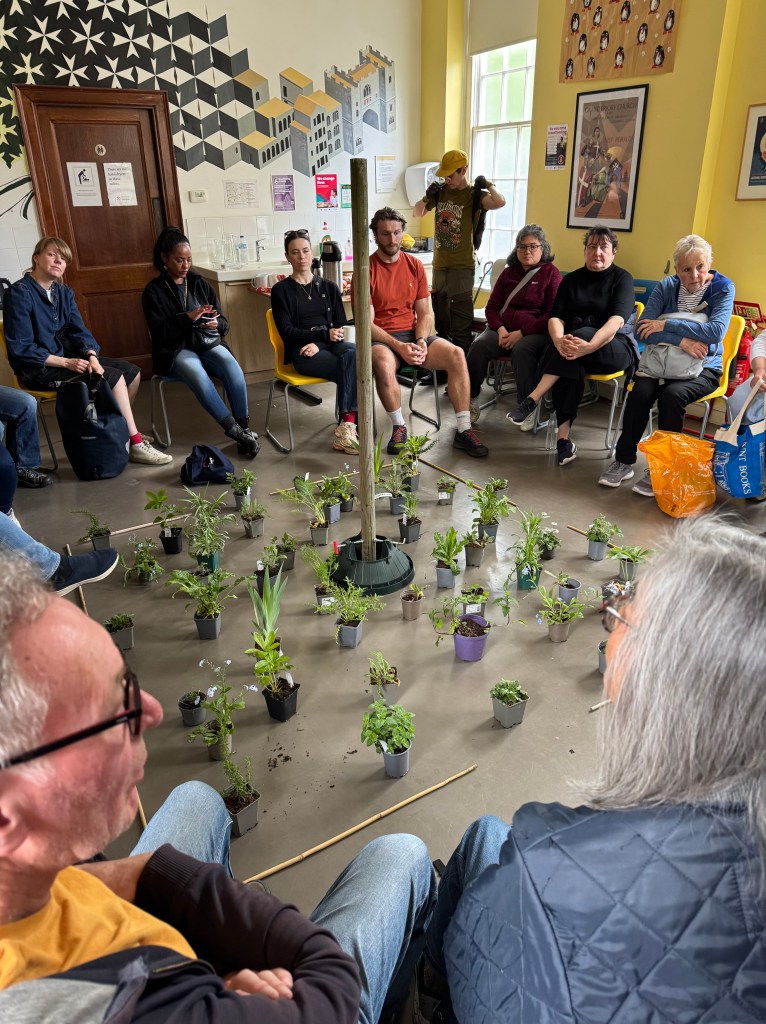
The choices and reasoning behind my planting design.
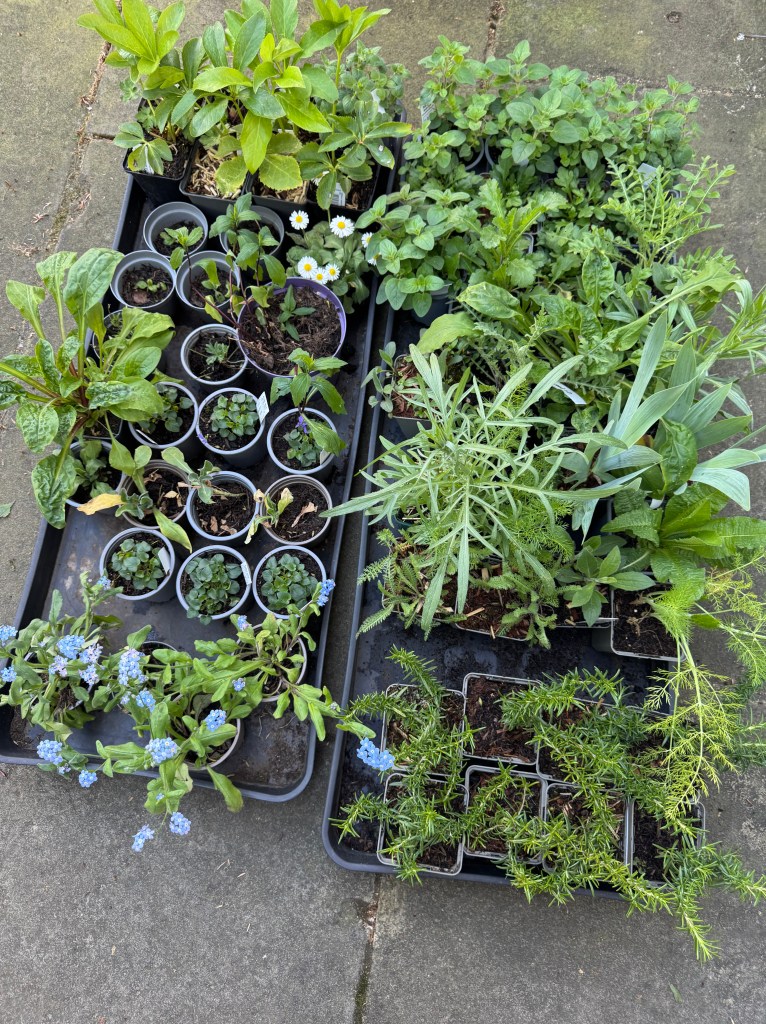
Pollinator friendly – native but limited to May to July.
1 no. Bellis perennis (Daisy)
2 No. Centaurea cyanus (Cornflower)
2 No. Geranium dissectum (Cut-leaved cranesbill)
1 No. Leucanthemum vulgare (Oxeye daisy)
2 No. Silene dioica (Red campion)
1 No. Dipsacus fullonum (Teasel)
Extend the season – garden perennials from February through to November.
2 No. Aster ageratoides ‘Ezo Murasaki’
3 No. Calendula officinalis (Pot marigold)
2 No. Helleborus × hybridus ‘Pretty Ellen Pink’ (Lenten rose)
2 No. Helleborus × hybridus ‘Pretty Ellen White’ (Lenten rose)
4 No. Myosotis arvensis (Forget-me-not)
Deterrence – looks enough like a little garden so humans keep their dogs off it, do not throw litter on it…
2 No. Achillea ‘Credo’ (Yarrow)
2 No. Aster × frikartii ‘Mönch’
1 No. Foeniculum vulgare (Common fennel)
3 No. Geranium ‘Rozanne’ (Hardy geranium)
2 No. Iris ‘Superstition’ (Bearded iris)
2 No. Rudbeckia fulgida var. sullivantii ‘Goldsturm’ (Black-eyed Susan)
Deterrence (trample) – edging.
3 No. Origanum vulgare (Wild marjoram)
3 No. Erigeron karvinskianus (Mexican fleabane)
4 No. Rosmarinus officinalis (Rosemary)
4 No. Viola riviniana (Common dog violet)